
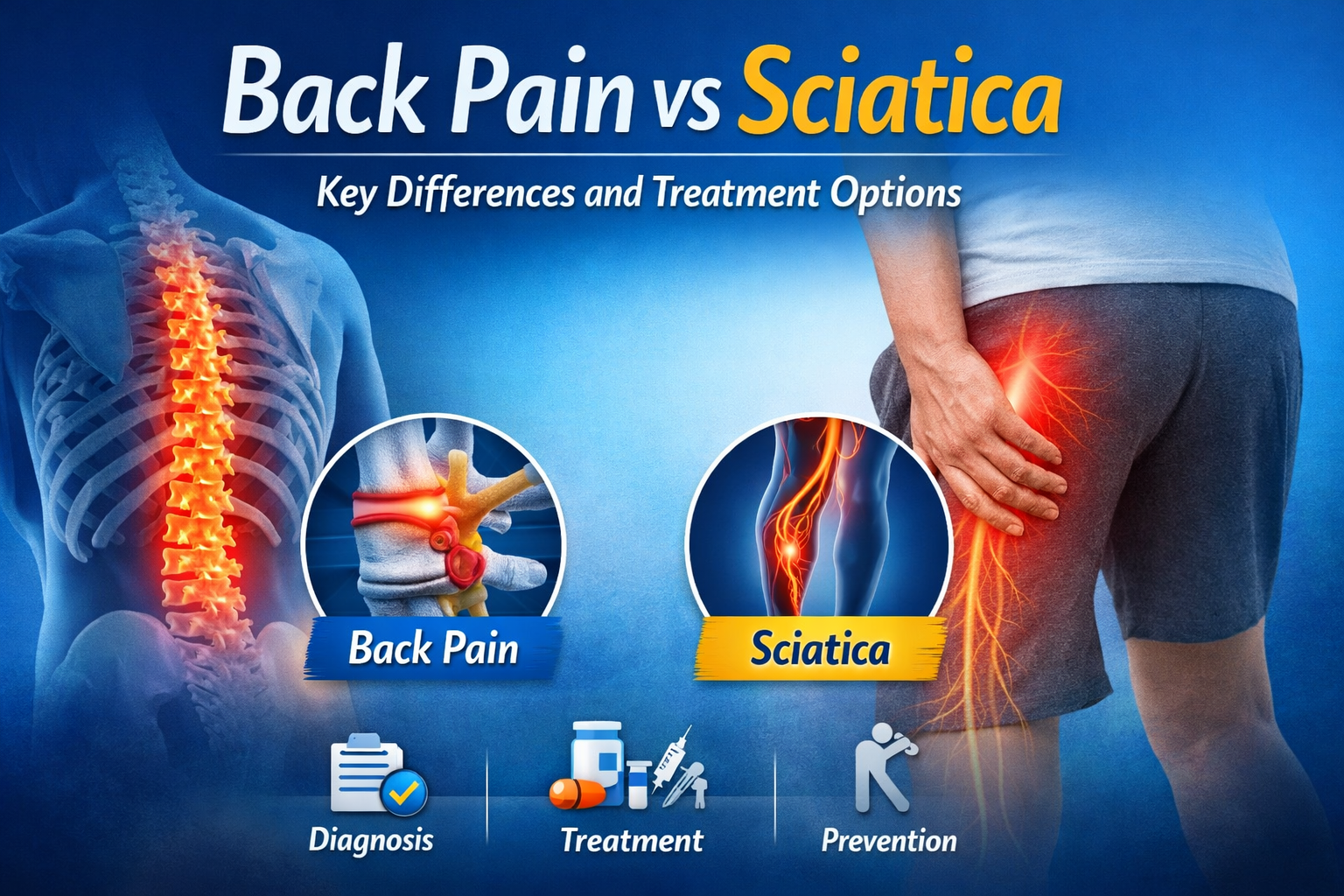
Back pain is one of the most common health problems worldwide, affecting people of all ages. According to the World Health Organization, nearly 80% of adults experience back pain at some point in their lives. While some cases are mild and temporary, others can develop into chronic conditions.
A common concern many people face is distinguishing simple back pain from sciatica, a condition that involves irritation or compression of the sciatic nerve. Misunderstanding the two can lead to delayed treatment and prolonged discomfort.
In this guide, we’ll break down the differences between back pain and sciatica, their causes, symptoms, diagnosis, treatment options, preventive measures, and when to seek professional help. By the end, you’ll know exactly how to manage and prevent these painful conditions.
What Is Back Pain?
Back pain refers to discomfort in the upper, middle, or lower back. It is often caused by muscle strain, ligament injuries, poor posture, or underlying spinal issues. While most back pain is temporary, chronic back pain can affect your daily activities, sleep, and overall quality of life.
Common Causes of Back Pain
- Muscle strain due to heavy lifting or sudden movements
- Poor posture during long sitting hours
- Herniated or degenerative discs
- Arthritis or osteoporosis
Symptoms of Back Pain
- Dull, aching pain in the back
- Stiffness or difficulty moving
- Pain that worsens while bending or sitting
- Mild numbness in some cases
What Is Sciatica?
Sciatica occurs when the sciatic nerve, the largest nerve in the body, becomes compressed or irritated. This nerve runs from the lower back down each leg, so sciatica pain is usually felt along the path of the nerve, often radiating from the lower back to the buttocks, thigh, and even foot.
Common Causes of Sciatica
- Herniated or slipped disc
- Spinal stenosis
- Piriformis syndrome
- Degenerative disc disease
Symptoms of Sciatica
- Sharp, shooting pain in one leg
- Numbness, tingling, or burning sensations
- Weakness in the leg or foot
- Pain aggravated by sitting, sneezing, or coughing
Key Differences Between Back Pain and Sciatica
| Feature | Back Pain | Sciatica |
|---|---|---|
| Pain Location | Localized in the back | Radiates from lower back to leg |
| Type of Pain | Dull, aching, stiffness | Sharp, burning, shooting |
| Nerve Involvement | Usually none | Directly affects sciatic nerve |
| Common Causes | Muscle strain, poor posture, arthritis | Herniated disc, spinal stenosis |
| Treatment | Rest, exercise, pain relief | Physiotherapy, nerve pain care, sometimes surgery |
Tip: Keeping a pain diary noting the location, intensity, and triggers can help your doctor differentiate between back pain and sciatica.
Diagnosis and Tests
Proper diagnosis is critical for effective treatment. If your pain persists for more than a few weeks or worsens over time, you should consult a back pain or sciatica specialist.
Diagnostic Methods:
1. Physical Examination:
2. Imaging Tests:
Treatment Options
1. Home Remedies & Lifestyle Changes
Most mild back pain and sciatica cases can improve with self-care:
2. Medical Treatments
When self-care isn’t enough, medical intervention may be required:
3. Physiotherapy & Alternative Treatments
Targeted exercises and therapies can relieve pain and prevent recurrence:
Prevention Tips
Preventing back pain and sciatica is easier than treating them:
Secondary Keywords: Back Pain Treatment Options, Sciatica Treatment
When to Seek Professional Help
You should see a specialist immediately if:
If you’re looking for expert care, consulting a back pain specialist in Wakad Pimpri Chinchwad can provide targeted evaluation and treatment to relieve pain effectively and prevent complications.
Lifestyle Changes for Long-Term Relief
1. Ergonomic Workplace Setup
2. Exercise Regularly
3. Sleep Position & Mattress
Conclusion
Understanding the difference between back pain and sciatica is key to managing your health effectively. While mild cases can improve with lifestyle changes and home remedies, chronic or severe cases may require medical treatment, physiotherapy, or surgery.
Early intervention, correct diagnosis, and adopting healthy habits can help you live a pain-free life. If you’re experiencing persistent pain, consult a specialist near you to prevent complications and get targeted treatment.
Frequently Asked Questions
Read the latest property how-to guides, and information and tips for buying, selling, investing and renting.
Yes, nerve compression from certain back conditions can lead to sciatica if untreated.
Mild cases may resolve in a few weeks, while severe cases may take months with treatment.
Medium-firm mattresses that support spinal alignment are ideal.
Yes, incorrect exercises can aggravate symptoms. Always follow a specialist-recommended routine. .
Yes, yoga, stretching, hot/cold therapy, and maintaining good posture can help.